A Clean Slate for Sauber as F1 Prepares for a 2026 Revolution
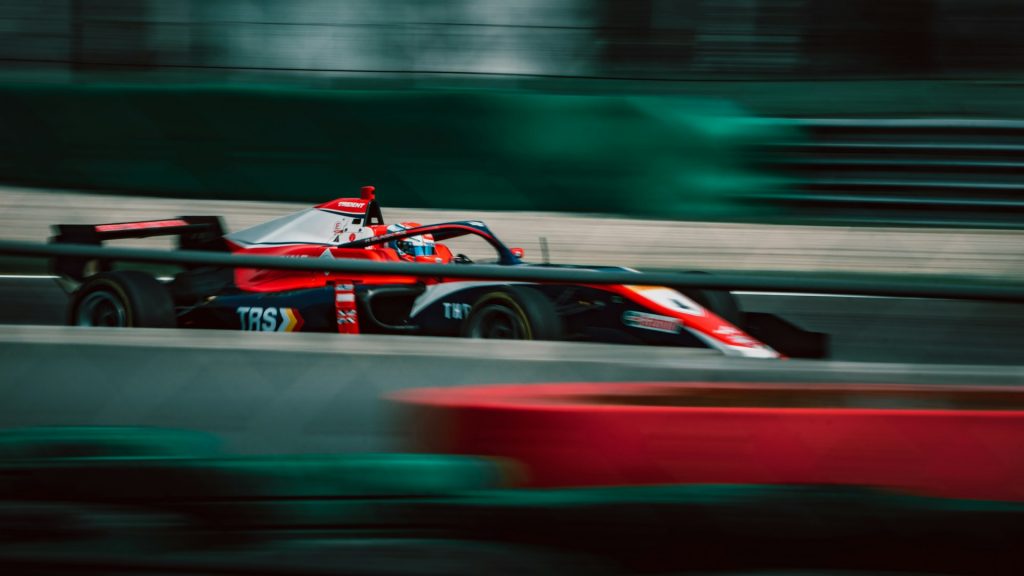
The 2025 stat sheet for Stake F1 Team Kick Sauber sits as a blank canvas, with zeros currently populating every major category from points and podiums to sprint race results. As the Hinwil-based squad prepares to log its 616th Grand Prix entry, they face a pivotal season under the leadership of Team Chief Jonathan Wheatley and Technical Chief James Key. While the upcoming campaign is the immediate focus, the team is operating in a unique transitional window, bridging a historic past with a rapidly approaching, high-tech future.
A Legacy of Swiss Engineering
Since Peter Sauber first guided his eponymous team onto the grid in 1993, the Swiss outfit has become a true mainstay of Formula 1. It’s a team with a reputation for punching above its weight, having nurtured future legends like Michael Schumacher and Heinz-Harald Frentzen early in their careers. Over the decades, the team has evolved through various identities, notably achieving race-winning success during BMW’s brief ownership and competing recently under the Alfa Romeo banner.
Now running as Stake F1 Team Kick Sauber, the squad holds a career record of 1,088 points and 27 podiums, with a single pole position and race win to its credit. However, this current identity is essentially the final bridge to a new era. In 2026, the team will officially transform into the Audi works squad, a massive operational shift that coincides perfectly with one of the most significant technical shake-ups in the sport’s history: the death of DRS.
The End of the DRS Era
Just as Sauber prepares to shed its current skin in 2026, Formula 1 is preparing to retire one of its most controversial features. After fifteen years of influencing race strategies, the Drag Reduction System (DRS) is being scrapped. Introduced in 2011 to combat “processional racing”—where cars would get stuck in nose-to-tail traffic with no way to pass—DRS was always something of a necessary evil. It provided a speed boost on straights by opening a flap in the rear wing, but over time, its effectiveness came under scrutiny.
While it certainly increased the volume of overtakes, critics argued it hollowed out the excitement. Passes became too clinical, often looking like inevitable highway lane changes rather than wheel-to-wheel combat. The system also struggled to mitigate “dirty air” on tighter circuits, meaning that even with the wing open, turbulence from the lead car could still stifle a challenge. Ultimately, DRS acted as a band-aid applied by the FIA to cover deeper aerodynamic flaws without ever fixing the root problem.
Next-Gen Warfare on Track
The 2026 regulations promise a return to organic racing through advanced active aerodynamics and new energy deployment systems. Instead of a simple button press on a straight, drivers will have access to an “overtake mode.” This feature grants a surge of electrical power to a driver running within one second of a rival, facilitating sharper, more aggressive attacks. Additionally, a “boost mode” will offer further energy recovery options for both attacking and defending, adding a layer of strategic depth that DRS never offered.
Complementing the power unit changes is a new active aero system, which will automatically adjust the car’s wing configurations based on where it is on the track to optimize speed and stability. The goal is to put the outcome of the race back in the driver’s hands. The sport is looking to recreate moments like Mark Webber’s legendary pass on Fernando Alonso at Spa in 2011—moves born from grit, courage, and situational awareness rather than an artificial velocity spike.
For a team like Sauber, the convergence of their transition into Audi and this regulation overhaul represents a massive opportunity. As the sport moves away from the “push-to-pass” era toward a future defined by high-tech dogfights, the grid in 2026 will look and race very differently than it does today.